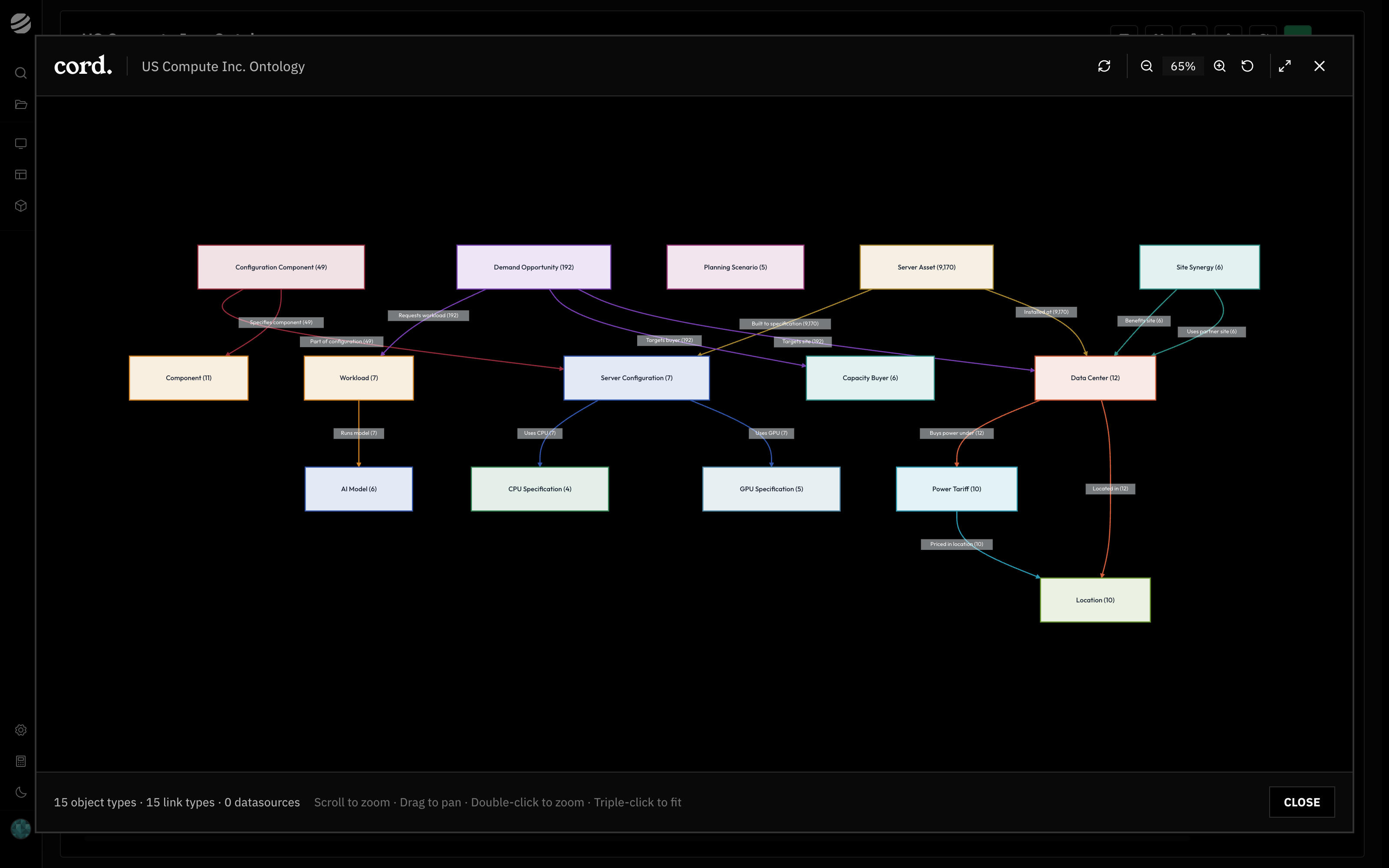
The ontology is Cord’s model of your business. It organizes data into objects and relationships that functions and apps can use together, such as data centers, their installed servers, and demand from buyers. Each object type has an identifier to match records across updates and a title property for the name you see when browsing.
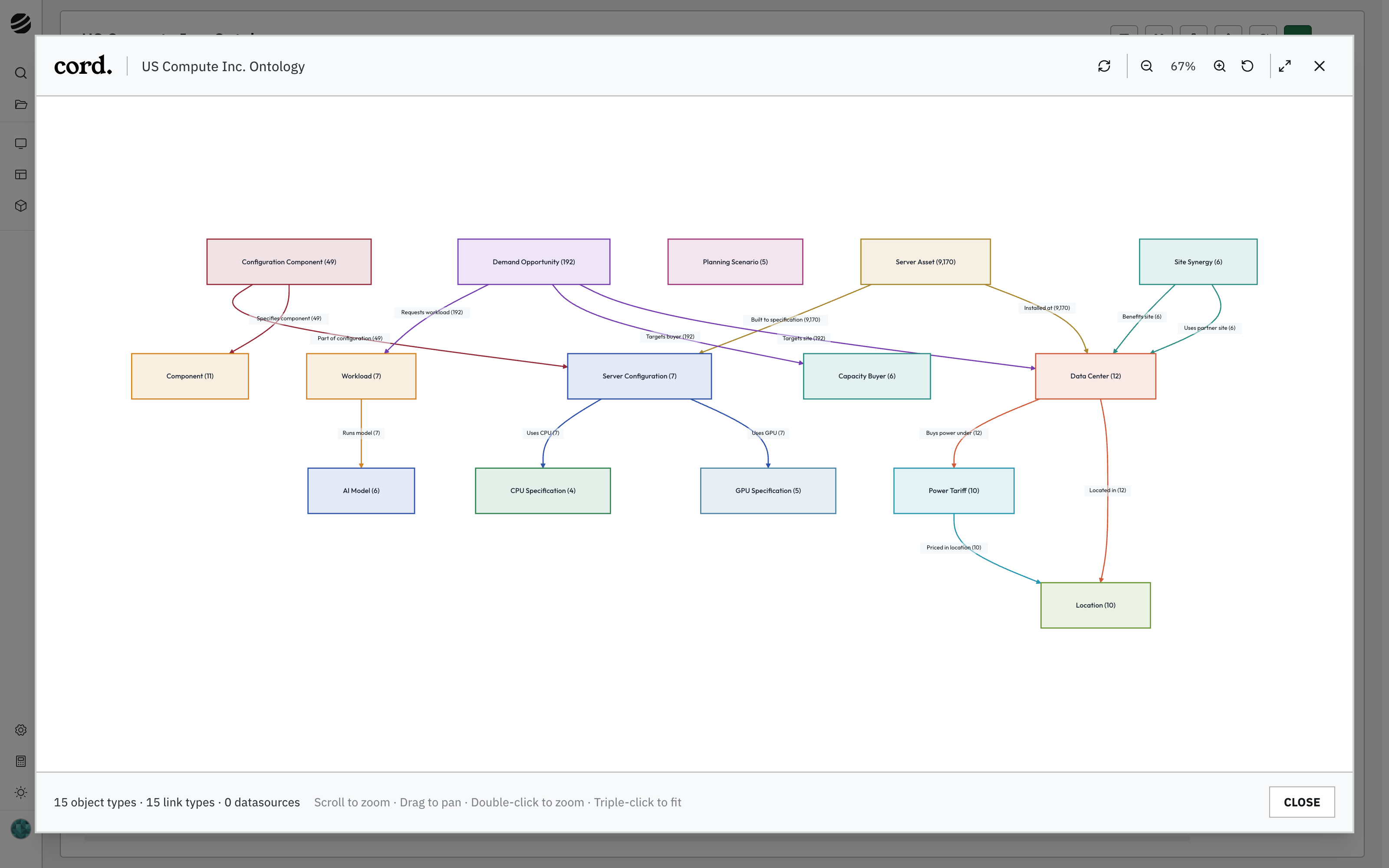
US Compute ontology graph showing 15 object types, including Data Center, Server Asset, Capacity Buyer, and Demand Opportunity, and their relationshipsUS Compute ontology graph showing 15 object types, including Data Center, Server Asset, Capacity Buyer, and Demand Opportunity, and their relationships

Object types and relationships in US Compute Inc.

From pipeline to ontology

A pipeline artifact is a saved version of your prepared data. An ontology writer maps its columns to object properties and uses the identifier to create or update matching records. Pipeline output → saved artifact → writer mapping → review changes → apply to ontology A dry run previews the changes before you apply them. Creating an artifact leaves the ontology unchanged until a writer applies it. Functions and apps can then work with the populated records and their relationships.

Choose a guide

For more examples and source tracing, see Understanding Cord: Ontology.