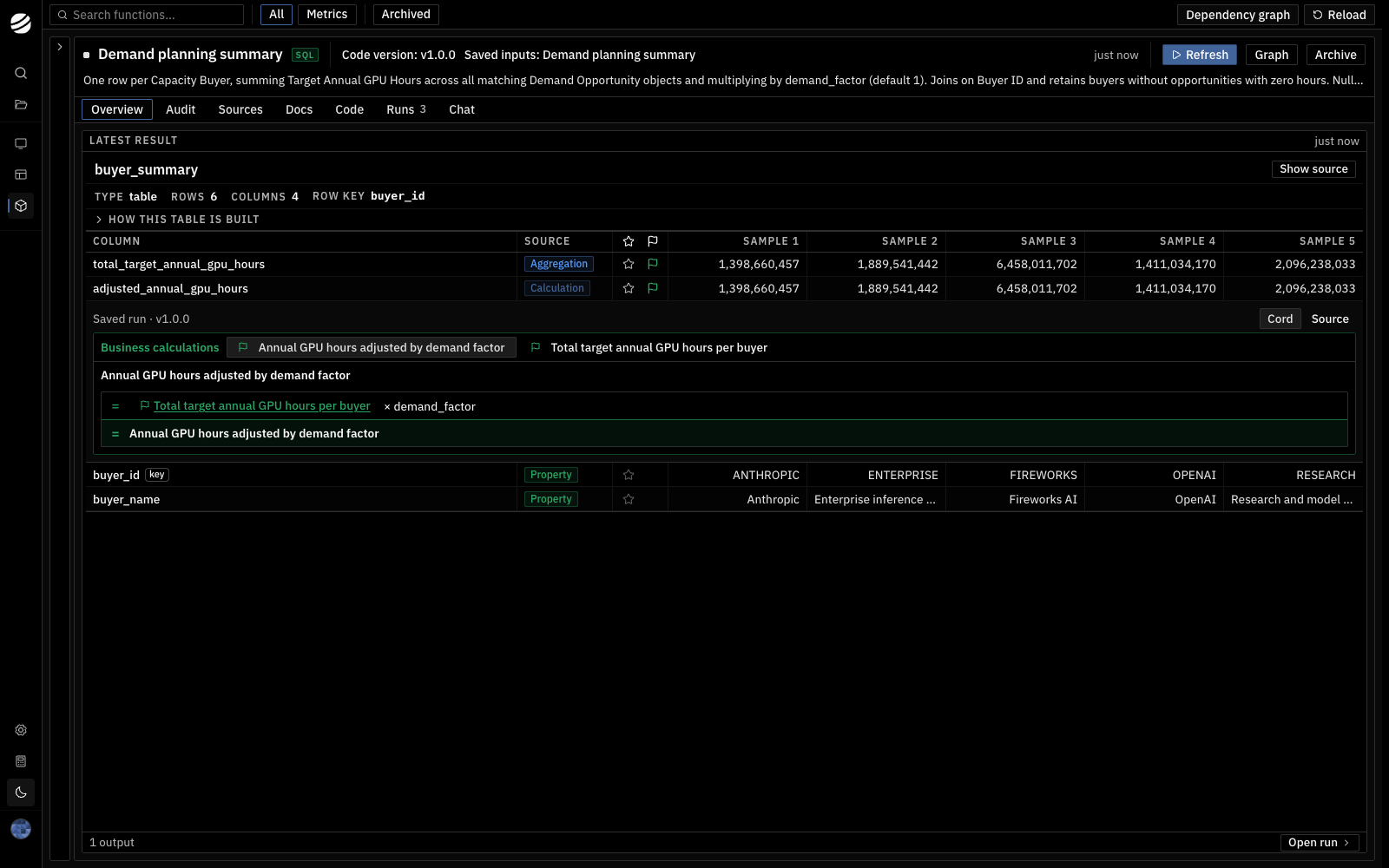
A function is saved business logic. It reads data, applies rules, and produces results you can rerun or use in an app. For example, a demand planning function can total each buyer’s target GPU hours and apply a growth assumption. A function can read your ontology or outputs from other functions. Inputs let you change assumptions without rewriting its logic.
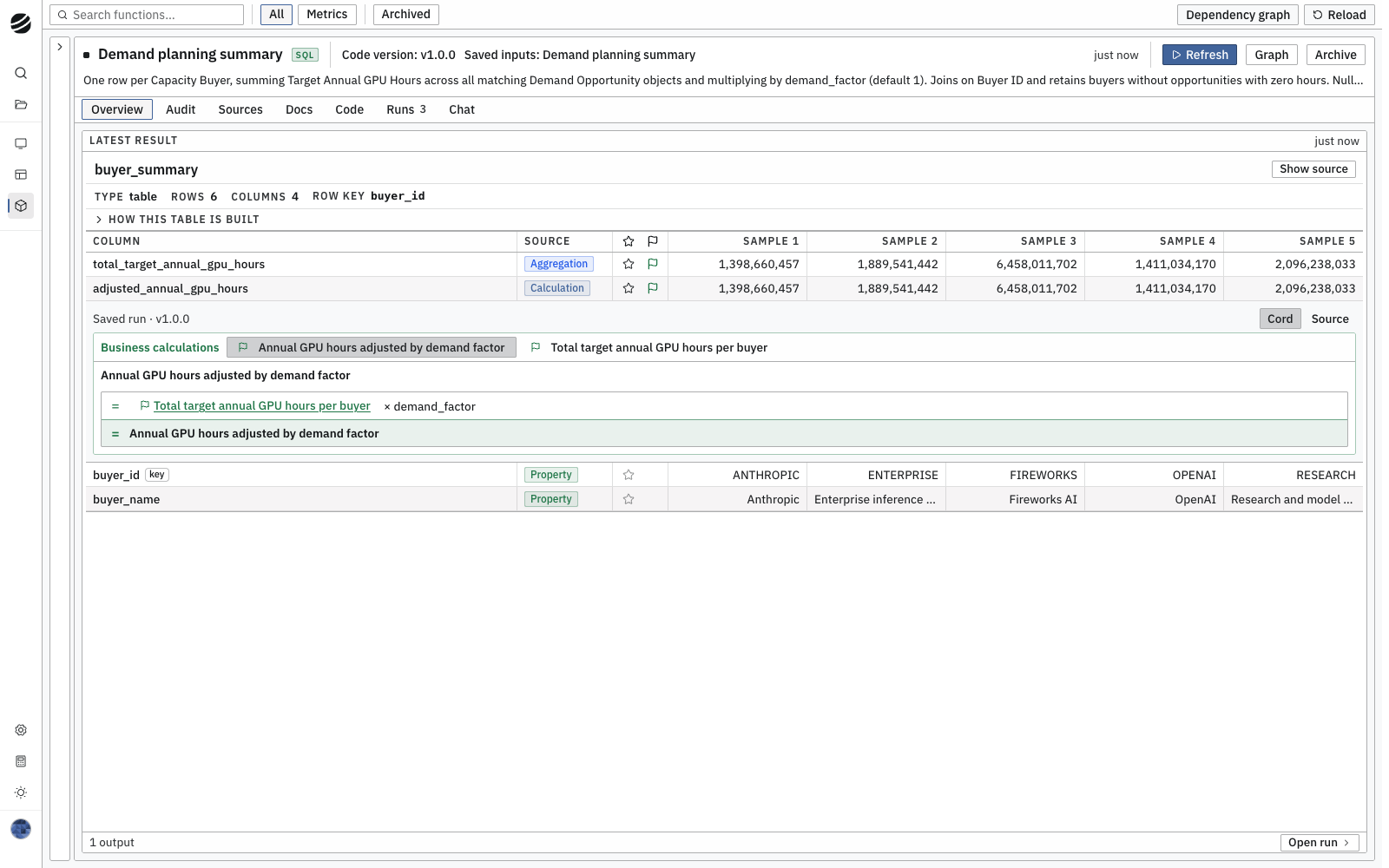
Demand planning summary and its output in US Compute Inc.Demand planning summary and its output in US Compute Inc.

Demand planning summary and its output in US Compute Inc.

From ontology to apps

Ontology data + inputs → function run → saved outputs → apps or other functions Apps use these outputs for tables, charts, and decisions. Audit explains how output fields are derived and traces them to source properties.

Choose a guide

For worked examples, see Understanding Cord: Functions.